

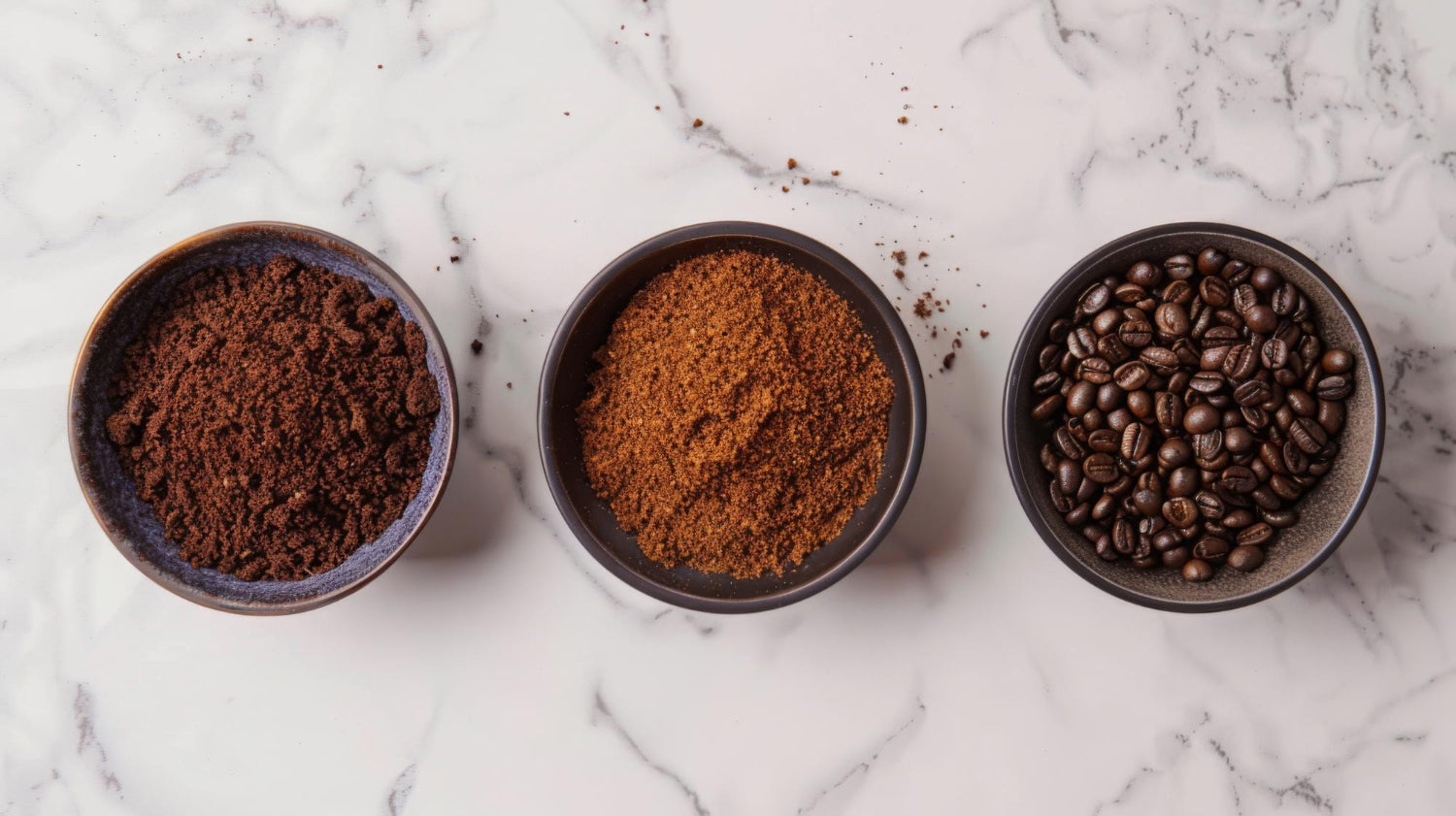
With so many brewing methods these days, the size of coffee grind can be a tricky thing to work out. It can feel like a daunting prospect for a new coffee-enthusiast to learn.
Don’t fret, this blog aims to cover everything you need to know about how the size of your grind can affect your coffee, and guide you on what sizes to start with when brewing at home.
Consider this blog your go-to cheat sheet for finding the perfect grind size every time.
Right, let’s get started.
Why the Size of your Grind Matters
If you’ve ever brewed a cup of coffee at home that’s come out tasting overly bitter or too sour, the problem might likely be the size of the grind that you’re using.
It’s one of only a few major elements that will have a direct effect during coffee extraction, yet it’s an often overlooked aspect by a lot of people. It can make a world of difference in how your finished drink will taste, and it’s important to understand exactly how it can influence your brewing process.
How Grind Size Affects the Extraction Process
When hot water comes into contact with ground coffee, it starts to extract flavour compounds from it. When you put a coffee bean through a grinder, you’re turning that bean into thousands of little coffee grounds, and providing significantly more surface area for water to extract from. This allows your water to pull those desired flavour compounds at a much faster rate. Therefore… the finer the grind, the quicker the extraction. This is where your chosen brewing method will come into play.
Every kind of brewing process will vary in ideal grind size and extraction time. Using the wrong size can significantly alter how that brew will taste.
Depending on your method of choice…
Too fine a grind: can cause over-extraction—where the water and the grounds are in contact for too long, and pulls too many of the undesirable bitter compounds, such as tannins and chlorogenic acids from the grounds. This excess of bitter compounds will overpower any desirable flavours that were already extracted, leaving you with a mouth-drying, harsh, and intensely bitter-tasting brew.
Too coarse a grind: might lead to under-extraction—where the water isn’t able to pull all of the desired flavours from the grounds. As acidic compounds are generally the first to dissolve in water, this will generally leave you with a brew that’ll taste overly sour and underdeveloped, with a weak and watery body.
Getting the grind size right means finding that sweet spot where the brewing method has just enough time to extract all of those desired flavours from the roast, striking the perfect balance between acidic, sweet, and bitter.
Your Grind Size Guide for Every Brewing Method
Below we’ve put together the quintessential guide for every type of coffee-brewing method that’s commonly used in Ireland, along with the ideal grind size for each of them. Use this as a reference for when you’re trying out a new brewing technique, or even as a starting point for when you’re dialling-in your coffee grinding to achieve that perfect brew for you. Grinding at home? Start with freshly roasted whole beans from our range of coffee beans in Ireland.
Note: If you’re particularly nerdy, you’ll want to know that in the coffee world we measure grind size in µm (micrometres), where 1 µm equals 1/1000 of a millimetre.
Cold Brew:

Grind Size: Extra Coarse (Between 1100µm – 1400µm)
Consistency: Should look like kosher salt granules.
Extraction Time: Anywhere between 12 to 24 Hours.
Why: Your coffee grounds will be steeping in cold water for a minimum of 12 hours, so you’ll need a large and robust grind size that can stand up to that long and slow extraction process. It’ll also make filtering out the used grounds after brewing a lot easier.
French Press/Cafetière:

Grind Size: Coarse (Between 1000µm – 1200µm)
Consistency: Should look like coarse flaky sea salt.
Extraction Time: Usually 4 to 5 minutes
Why: You’ll want to use a coarse grind for a French press because it filters more effectively from the brewed drink when you plunge. Smaller grinds will allow small particles to slip through the metal mesh filter, resulting in a gritty and muddy cup of coffee.
Chemex (Pour-Over/Filter):

Grind Size: Medium-Coarse (Between 700µm – 900µm)
Consistency: Should look and feel like coarse sand.
Extraction Time: Between 3.5 to 4.5 minutes.
Why: The Chemex uses a thicker filter paper than other pour-over methods, which causes water to move at a slower rate through it. This results in a longer extraction time, so you’ll want to use a slightly coarser grind to prevent over-extraction, and stop your grounds from clogging the filter—allowing the water to drip through at a steady rate.
V60 (Pour-Over/Filter):

Grind Size: Medium-Fine (Between 400µm – 700µm)
Consistency: Should look and feel like fine sand.
Extraction Time: Between 2.5 to 3.5 minutes.
Why: The V60 uses thinner filter papers, and has a design that allows for faster water-flow—making a slightly finer grind ideal. The finer grind will not only extract quicker, but also naturally slow the water-flow, giving it a slightly longer time to pull all of the nuanced flavours.
Aeropress Coffee Maker:

Grind Size: Medium-Fine (400µm – 600µm) for regular brewing. Medium (600µm – 800µm) if using the inverted method.
Consistency: Should look and feel somewhere between table salt and caster sugar.
Extraction Time: Between 1.5 to 3 minutes.
Why: We use a medium-fine grind for regular aeropress brewing because it offers enough surface area for an efficient extraction, but is just coarse enough to not cause excessive pressure or clog the filter. We use a slightly coarser grind for the inverted method, which lets our grounds steep a little longer.
Moka Pot / Stove Pot:

Grind Size: Medium-Fine (Between 400µm – 600µm)
Consistency: Slightly finer than table salt, not as fine as espresso.
Extraction Time: from the moment the coffee begins to rise into the collection chamber (top), total extraction time should be 20-30seconds, similar to espresso extraction. As soon as the extraction is complete, remove from the heat source.
Why: The moka pot can be very finicky to work with when trying to dial in your brew. It uses steam pressure to force hot water up through your coffee grounds, so you’ll want to use as fine a grind as possible, which won’t pass through the moka pot’s sieve into the top chamber.
Espresso:

Grind Size: Fine (Between 200µm – 400µm)
Consistency: Fine enough to look like a powder, but still feel grainy between your fingers.
Extraction Time: 25 – 30 seconds
Why: Espresso relies on a small amount of highly-pressured water passing quickly through a compacted coffee puck, so a fine grind is required to extract quickly. Knowing that an espresso shot should ideally take between 25 to 30 seconds to pull will allow you to adjust the size of your grind accordingly.
If the draw is shorter than 25 seconds, use a finer grind.
If the draw is longer than 30 seconds, use a coarser grind.
Added Note: Watch out for channelling (Water taking the path of least resistance through your coffee puck instead of flowing evenly). Too fine of a grind might create a build-up of pressure that will crack your coffee puck, which water will move through. Make sure that your tamp is always evenly distributed and that your grind is consistent to prevent this.
Our Advice
Invest in a burr grinder: Blade grinders tend to chop unevenly, which results in very inconsistent brewing. Burr grinders tend to give a much better consistency and uniformity to your grind.
Match your grind to your brew method: Start with these guidelines above, but make sure you fine-tune!
Always taste and adjust: If it tastes a little too sour or acidic, go a little finer. If it’s a bit too harsh or bitter, try a little coarser.
Finding the perfect grind size for your chosen brewing method is one of the easiest adjustments you can make to improve your coffee-game at home, and now that you’ve got the know-how… get out there and put it to good use!



Leave a comment
All comments are moderated before being published.
This site is protected by hCaptcha and the hCaptcha Privacy Policy and Terms of Service apply.