

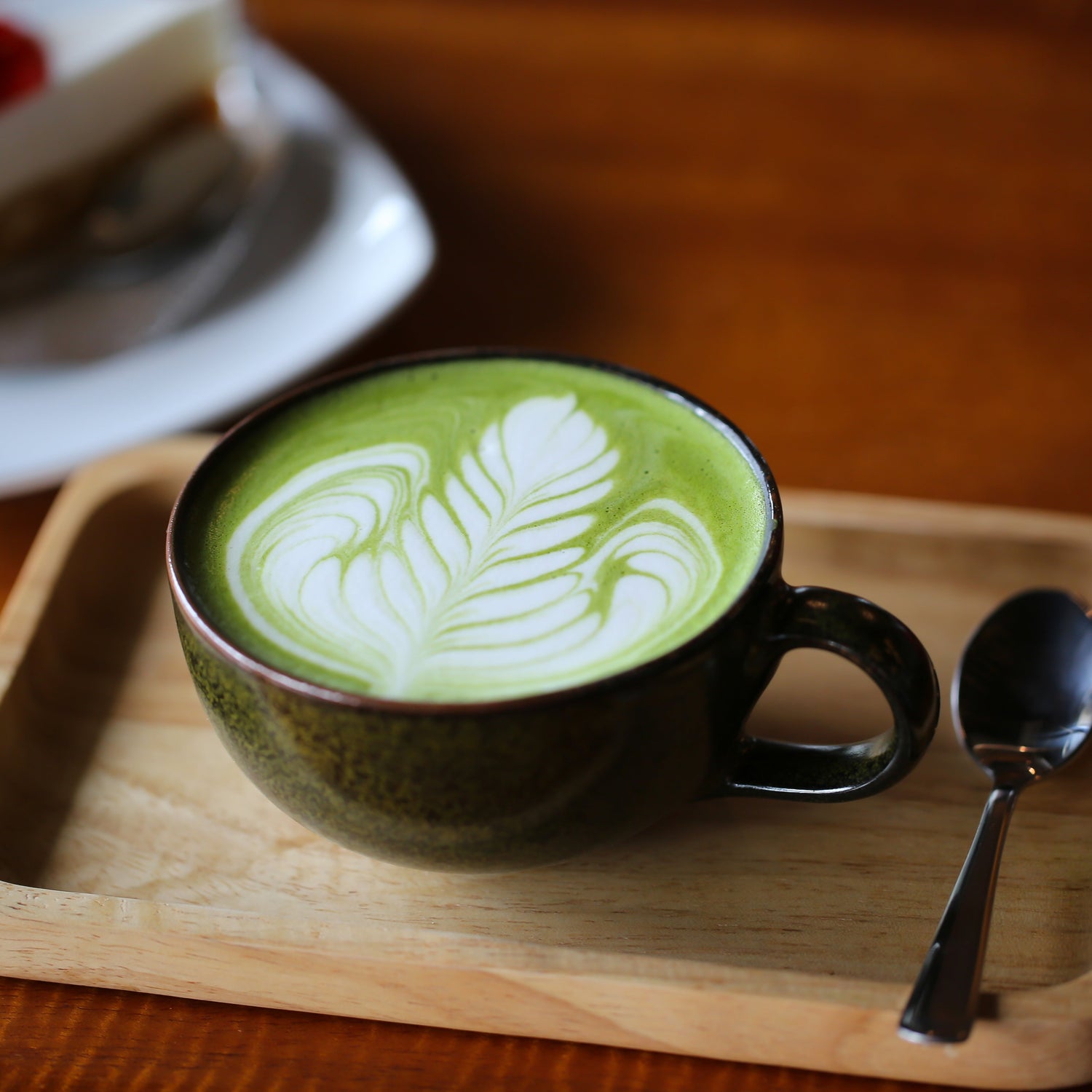
More and more of you have been asking us about matcha green tea. You've probably seen it in cafés, all over social media; it's having a real moment right now.
We've actually been stocking matcha for years, but demand has skyrocketed in the past few months. Ours is made by a very good, long-term friend of McCabes.
So if you're new to matcha, here's a handy guide to get you up to speed.
TLDR: Matcha is powdered green tea that you whisk into water and drink whole. It's grown in shade, tastes fresh and gently savoury, contains less caffeine than coffee with a calmer effect, and takes about two minutes to make at home.
So, what is matcha?
Matcha is a finely ground powder made from specially grown green tea leaves. Unlike regular tea, where you steep the leaves and throw them away, with matcha you whisk the whole powdered leaf into water and drink it. That means you're consuming the entire leaf, nutrients and all.

The tea plants destined for matcha are grown differently, too. For the final few weeks before harvest, the plants are shaded from direct sunlight. This slows their growth and encourages the leaves to produce more chlorophyll and amino acids, which is what gives good matcha its vivid green colour and its distinctive sweet, savoury depth. After harvest, the leaves are steamed, dried, destemmed and slowly ground into a powder so fine it feels like silk.
What does matcha taste like?
If you've only ever had a sugary matcha latte from a chain café, you haven't really tasted matcha yet.
Good matcha is grassy and fresh, with a natural sweetness and a savoury, almost brothy quality that tea people call umami. There's a gentle bitterness too, the same way there is in good coffee or dark chocolate, but it should never be harsh. If matcha tastes muddy, dusty or aggressively bitter, that's usually a sign of low quality powder or water that was too hot.
Pure matcha contains no sugar; latte blends like ours include a little organic cane sugar so they're ready to whisk straight into milk.
Matcha vs coffee?
This isn't a competition; coffee and matcha do different jobs, and once you understand the difference, you can pick the right one for the right moment.
Caffeine. A typical serving of matcha contains caffeine, but generally less than a standard cup of brewed coffee. More interesting than the amount is the delivery. Matcha naturally contains an amino acid called L-theanine, and many people find that the combination gives a steadier sort of alertness compared to the sharper lift of coffee.
Ritual. Brewing coffee well is ritualistic; whisking matcha is a ritual too, just a quieter one. Thirty seconds with a whisk and warm water is a surprisingly nice way to start a morning.
Taste. Completely different worlds. Coffee is roasted, rich, and aromatic. Matcha is fresh, green, and savoury.
What are the health benefits of matcha?
Matcha gets talked about like it's a miracle powder, and whilst it is genuinely good for you, it's worth being wary of what you read online
What's well supported: because you consume the whole leaf, matcha is naturally rich in antioxidants called catechins, the compounds green tea is best known for. It contains L-theanine, which is being studied for its calming effects alongside caffeine. Pure matcha has no sugar, no calories worth mentioning, and nothing artificial, at least until someone adds syrup to it.
What's hype: matcha will not detox you, melt fat, or replace sleep. No drink will. If a health claim about matcha sounds too good to be true, it probably is.
Honestly, matcha is no health hack, but it is a genuinely healthy drink to have in your rotation.
 How to make matcha at home (no fancy equipment required)
The traditional way uses a bamboo whisk called a chasen and a wide bowl. It's lovely, but you don't need any of it to get started. A small bowl or mug and a regular milk frother, or even a tightly sealed jar for shaking, will do the job.
- Sift about half a teaspoon of matcha into your bowl or mug. Sifting stops clumps, and matcha loves to clump.
- Add a small amount of warm water, not boiling. Around 75 to 80 degrees is ideal. Boiling water scalds matcha and turns it bitter, the same way it can ruin a delicate coffee. If you don't have a temperature-controlled kettle, boil your kettle and let it sit for a couple of minutes.
- Whisk briskly in a zigzag motion (not circles) until the surface is smooth with a fine layer of froth. With a milk frother, this takes about fifteen seconds.
- Drink it as is, or top up. Add more hot water for a longer drink, or pour it over warm or iced milk for a matcha latte. A little honey if you like, though a good matcha needs less sweetening than you'd think.
That's it. The whole process takes about two minutes.
Which matcha should you buy?
The short version: buy the best quality you can and check the colour. Vivid, bright green means fresh, well-grown, carefully ground matcha. Dull, yellowish or khaki green usually means older leaves or lower grades, and you'll taste the difference immediately.
You'll also see matcha sold as ceremonial grade or culinary grade. Ceremonial is the finer, sweeter grade made for drinking on its own. Culinary grade is more robust and better suited to lattes, baking and smoothies, where it has to hold its own against other flavours.
The matcha we stock at McCabes comes from a producer we've known and trusted for years, a friend of the company long before matcha was trending. We don't stock things we don't drink ourselves, and this one has earned its place on our shelves next to the coffee.

Koyu Matcha Latte – 150g
Organic matcha latte blend. 20 servings. Lightly sweetened and ready to whisk with hot milk.
€14.20
View Product
Koyu Matcha Latte – 1kg
The same organic matcha latte blend in a bulk size, for households and cafés that get through a lot of it.
€79.95
View ProductMatcha FAQs
Does matcha have more caffeine than coffee?
No. A typical serving of matcha contains less caffeine than a standard cup of brewed coffee. Matcha also contains L-theanine, an amino acid many people find gives a calmer, steadier alertness than coffee.
What does matcha taste like?
Good matcha tastes fresh and grassy with a natural sweetness and a savoury depth known as umami. It should never taste harsh or muddy. Aggressive bitterness usually means low quality powder or water that was too hot.
Do I need special equipment to make matcha?
No. The traditional bamboo whisk is lovely but not essential. A mug and a regular milk frother, or even a sealed jar for shaking, will make a perfectly good matcha.
What is the difference between ceremonial and culinary grade matcha?
Ceremonial grade is the finer, sweeter grade made for drinking on its own with just water. Culinary grade is more robust and better suited to lattes, baking and smoothies, where it needs to stand up to other flavours.
Is matcha good for you?
Matcha is naturally rich in antioxidants called catechins and has no additives, so it's a genuinely healthy drink to have in your rotation. Pure matcha contains no sugar; latte blends like ours include a little organic cane sugar so they're ready to whisk straight into milk. Either way, it is not a detox, a fat burner or a substitute for sleep, whatever the internet says.

Leave a comment
All comments are moderated before being published.
This site is protected by hCaptcha and the hCaptcha Privacy Policy and Terms of Service apply.